
 Español
 Italiano
 Deutsch
 Français
 Português
 日本語
日本語 简体中文
简体中文 한국어
한국어 Русский
Oboe reed making knives: guide to choosing the right tool.
If you are starting to make your own oboe reeds, the knife is one of the tools that changes everything. A good knife does not simply remove cane: it helps you work with control, understand what the reed needs and avoid scratches that can later become unstable response, a hard sound or a tip that is too fragile.
At EG-REEDS we work with oboe reeds every day, so we have prepared this guide to help you choose the right oboe reed making knife, use it well and buy the models available directly from our shop.
Why the knife matters so much in oboe reed making.
The oboe reed is extremely sensitive. Small differences in the tip, heart, sides or back change the response, tuning, resistance and colour of the sound. When we scrape, we are not just removing material: we are taking away the right amount of cane, in the right place, with a clean gesture.
From my personal experience after scraping thousands of oboe reeds and working as a principal oboist in professional orchestras, the knife must be sharp, suited to its blade type and well maintained. A dull knife does not cut the cane cleanly; it compresses it, forces you to use more pressure and can leave marks or scratches in the fibres. Those scratches are not only cosmetic: they can weaken the blade and make the reed less stable.
A well-sharpened knife lifts the cane smoothly. It lets you use less pressure, control thickness more accurately and make finer adjustments in delicate areas such as the tip.
What a good oboe reed knife should offer.
- A reliable edge: it should cut the cane without forcing your hand.
- Stability: the handle should feel comfortable and controlled.
- The right blade for your technique: fixed, folding, concave, razor-style or replaceable blade.
- Easy maintenance: some knives are sharpened; others use replacement blades.
- Protection: store it properly to avoid knocks, rust and accidents.
Types of oboe reed making knives.
Fixed blade knife.
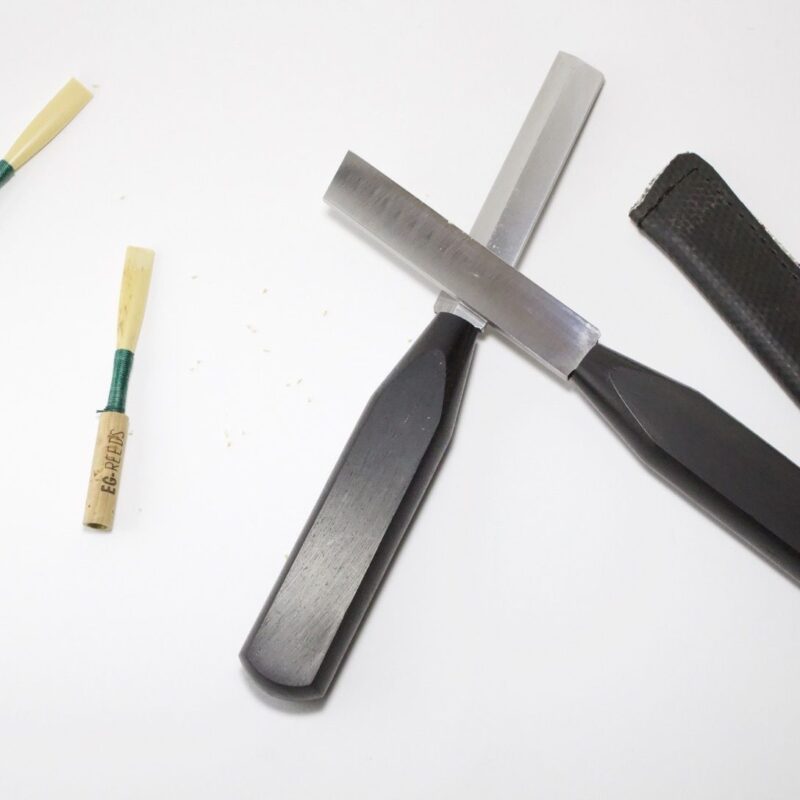
This is the classic option. It has a stable blade and helps you develop very precise technique. It requires learning how to sharpen, but many oboists love it because it gives a direct feeling on the cane.
For beginners, the Chiarugi knife is simple, affordable and practical. If you already have more experience, look at the professional Chiarugi knife or the Dolomiti Chiarugi knife.
Concave knife.
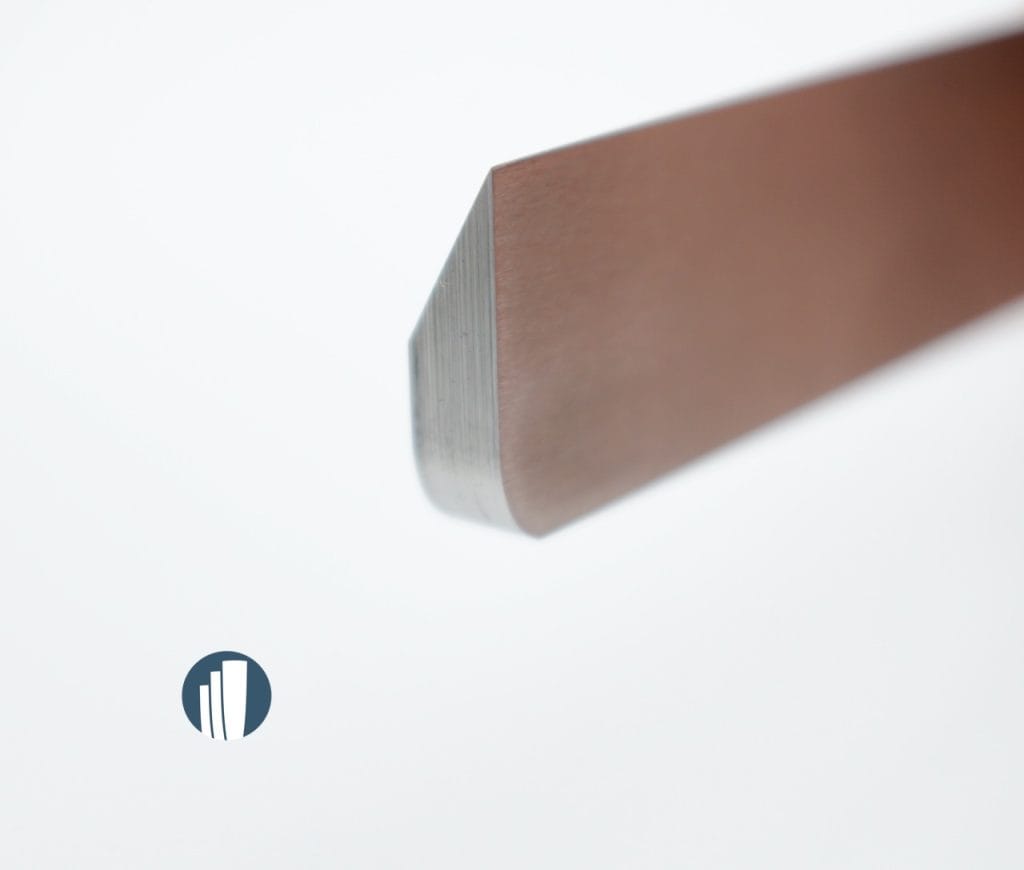
A concave blade gives a great deal of control over thickness. It can be very useful for players who want uniformity and a regular scrape, especially when adjusting reeds repeatedly.
In our shop you will find the Chiarugi concave knife, a semi-professional option for oboe and English horn reeds.
Folding knife.
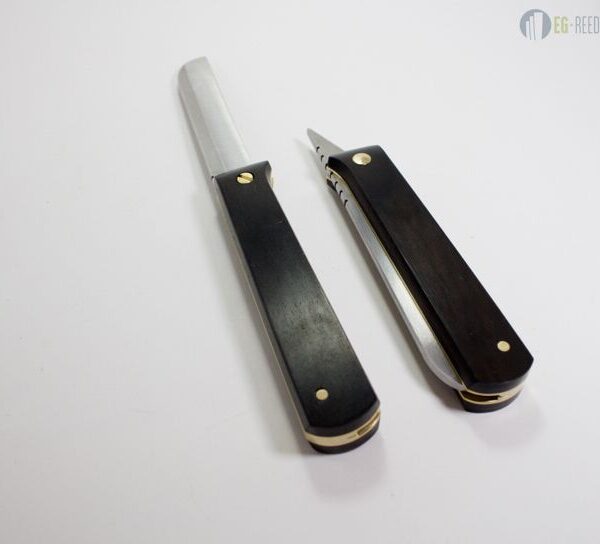
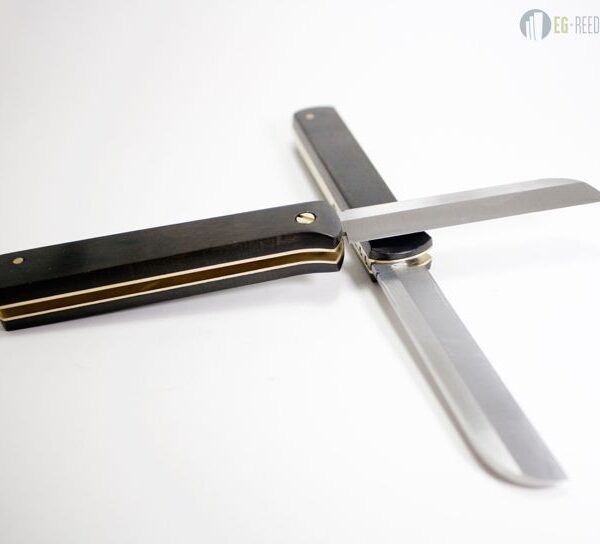
A folding knife is practical for carrying in the case or for oboists who travel often. The blade is protected when closed and takes up very little space, while still allowing precise scraping.
The professional folding Chiarugi knife is a good choice if you want portability and safety.
Knife with replaceable blades.
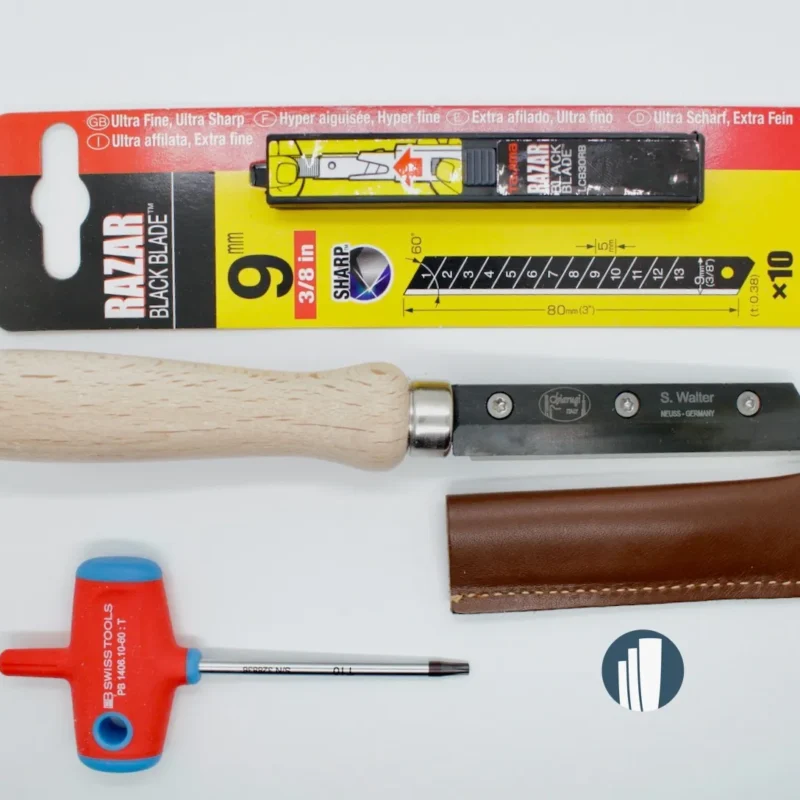
This is a very convenient alternative if you do not want to depend so much on traditional sharpening. When the blade loses performance, you replace it and return to a clean edge.
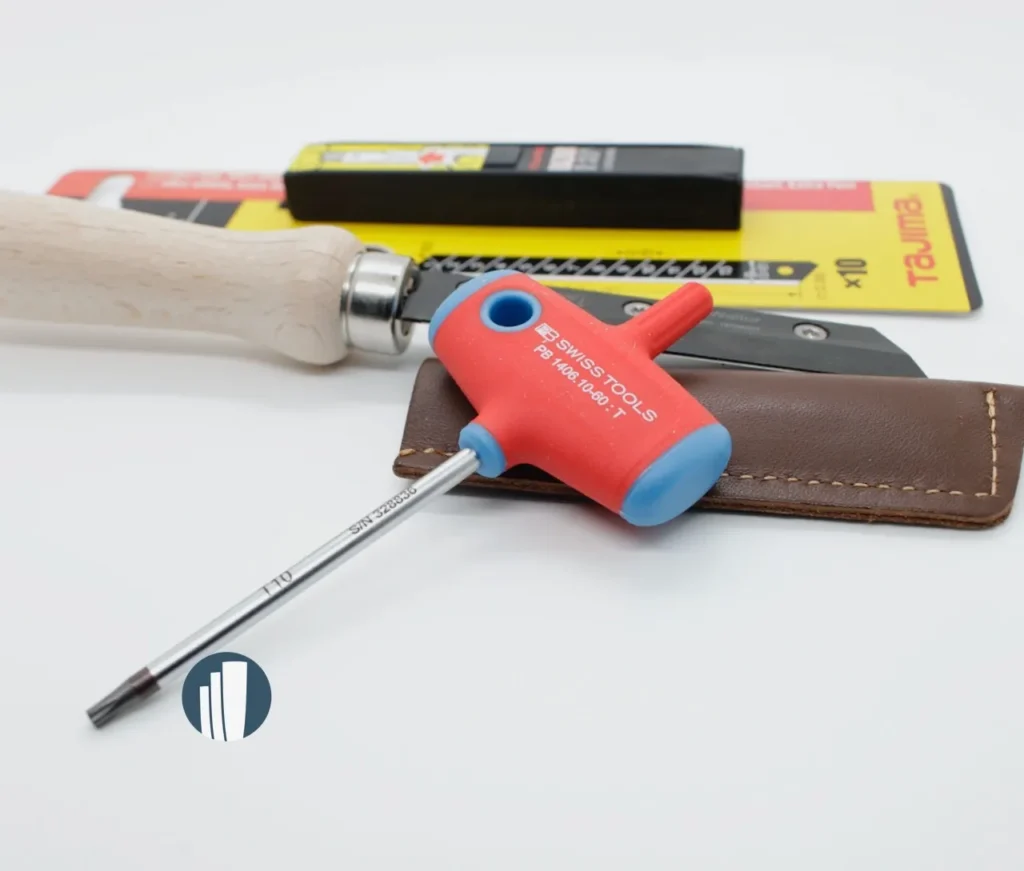
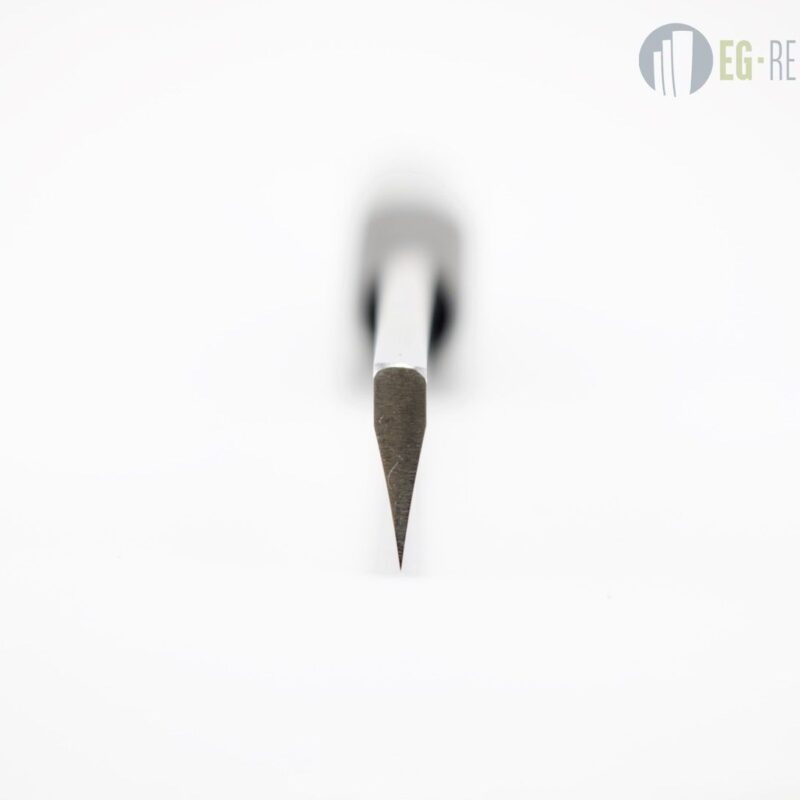
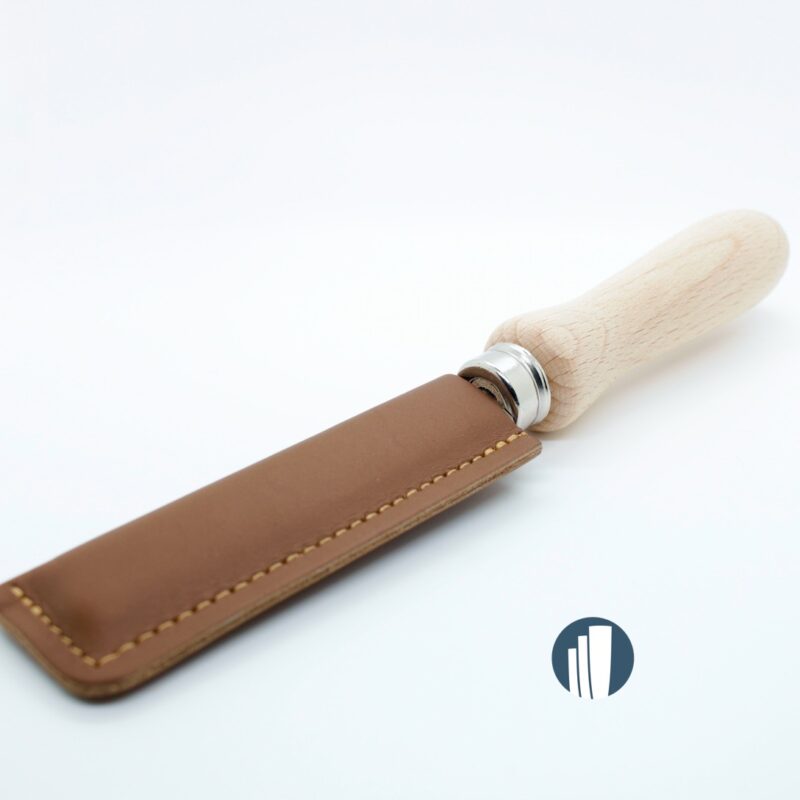
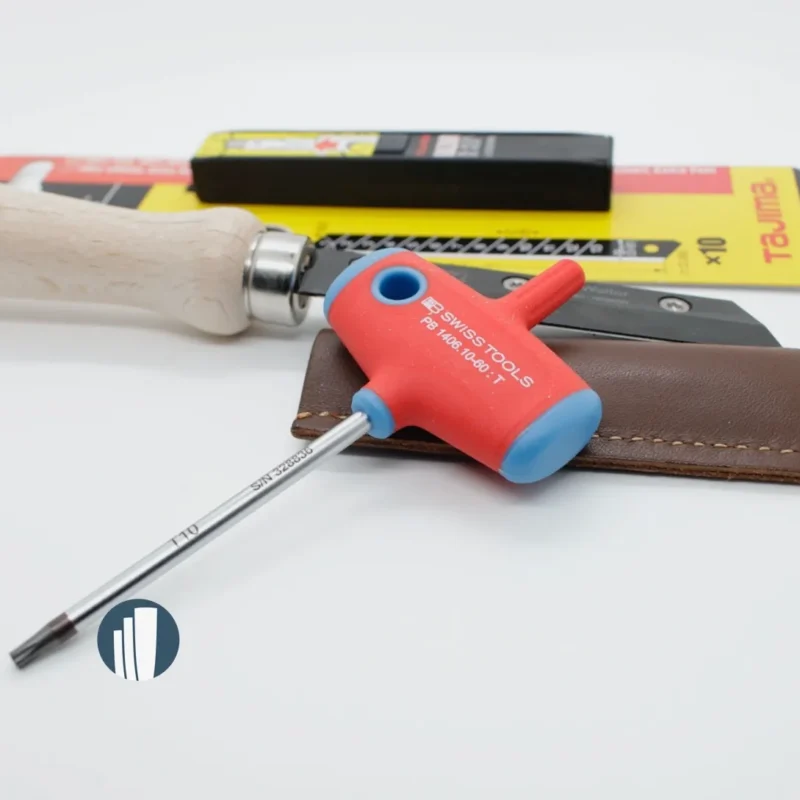
The Walter knife, made by Chiarugi, is designed for professional scraping with replaceable blades. It includes a leather case and spare blades. You can also buy the Walter replacement blade pack.
Oboe reed making knives.
In this video you can see our oboe reed knives and compare some of the models available at EG-REEDS.
You can also see the original Instagram post here: oboe reed making knives on @egreeds.
How to choose your knife according to your level.
| Level or need | What to look for | Recommended product |
|---|---|---|
| I am starting to scrape reeds | A simple, stable and affordable knife. | Chiarugi knife |
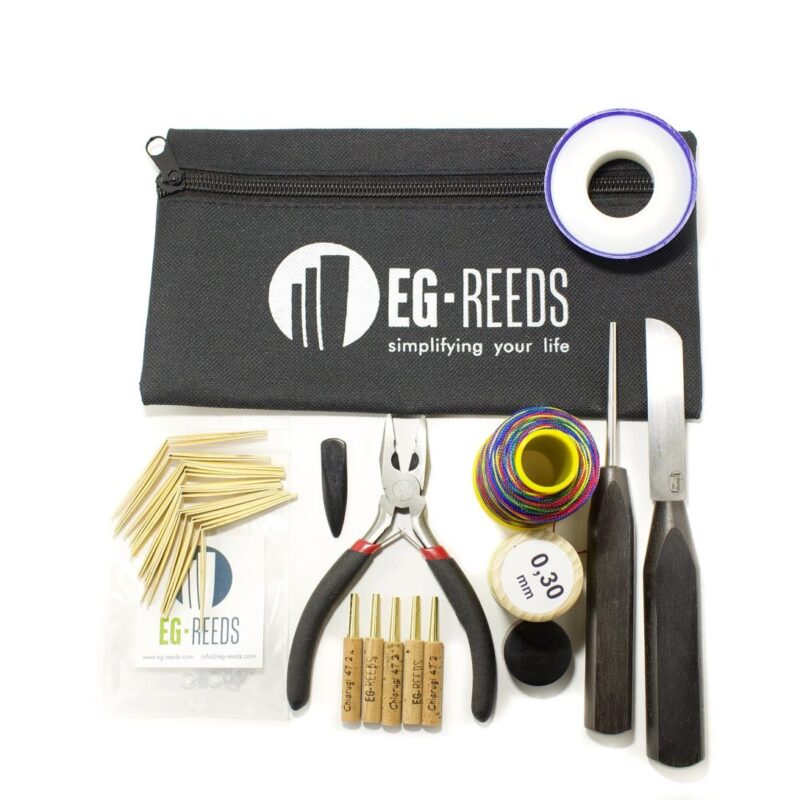
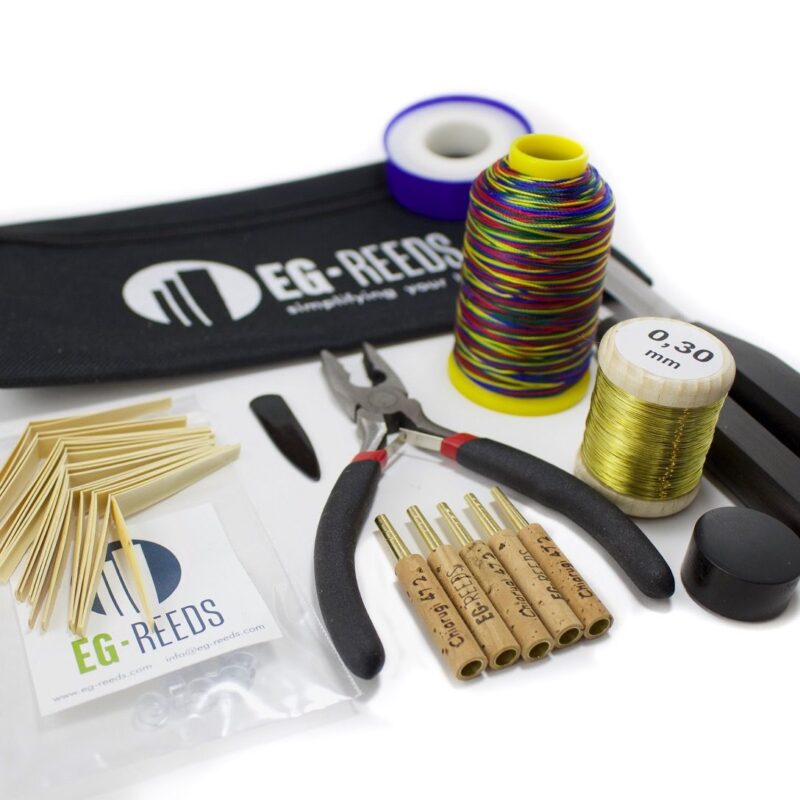
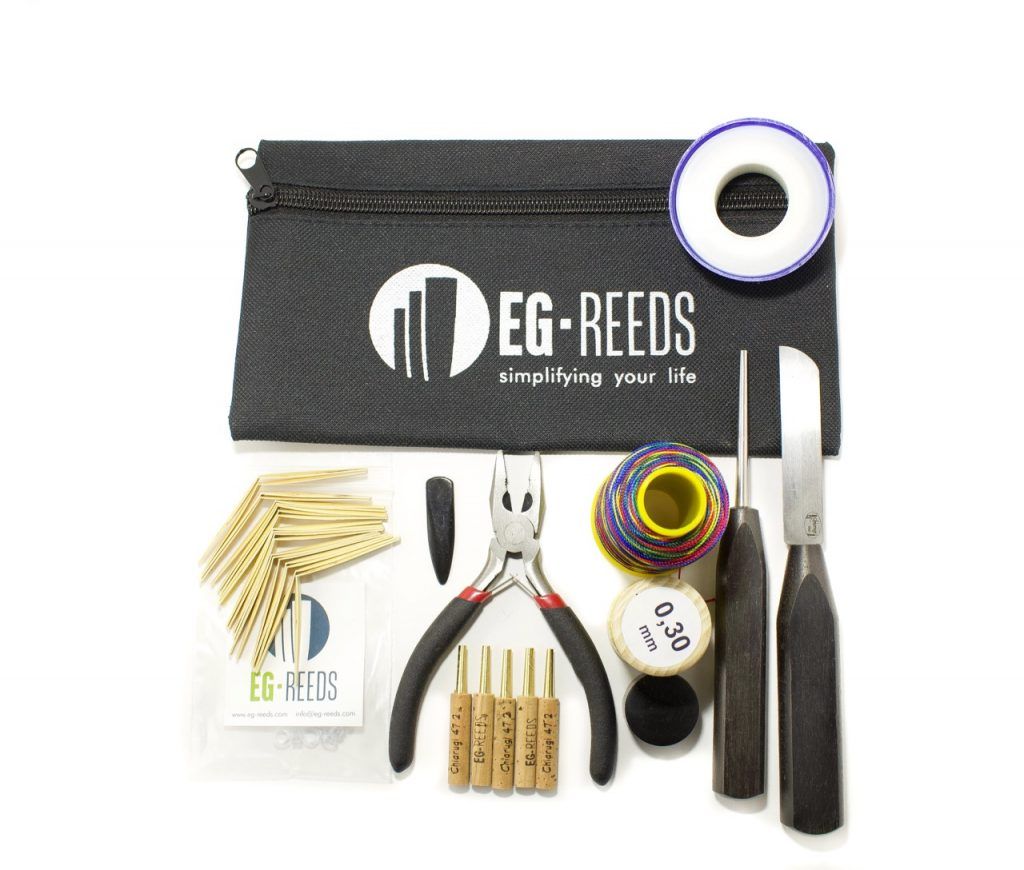
| I want a complete set | The basic tools for making oboe reeds. | Oboe reed making tool kit |
| I make reeds regularly | More precision, better grip and a professional blade. | Professional Chiarugi knife |
| I want a constantly fresh edge | Replaceable blades and consistent performance. | Walter knife |
| I need to carry it in my case | A folding, safe and portable design. | Professional folding Chiarugi knife |
Care tips for your oboe reed knife.
- Do not work on the reed for too long at once. The blade of the reed gets tired and it becomes easier to make bad decisions.
- Sharpen or replace the blade before it starts dragging. If you need pressure, the edge is no longer working properly.
- Avoid a burr. A strong burr can scratch and tear the cane fibres.
- Do not use the knife for other jobs. Protect it from rust, impacts and anything that can damage the edge.
- Work patiently. It is better to remove a little cane and test than to go too far.
Buy oboe reed making knives at EG-REEDS.
These are the models we recommend for making and adjusting oboe reeds. Open each product to see current prices, availability, photos and details.

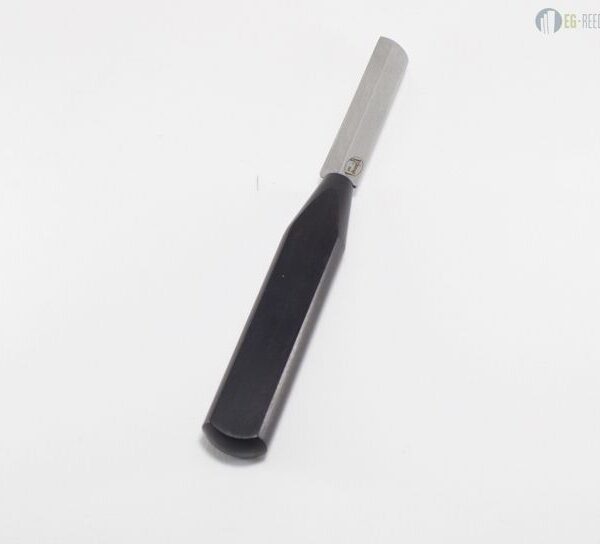




You can also view the full category here: all oboe reed making knives at EG-REEDS.
Frequently asked questions about oboe reed knives.
Which knife should I buy if I am starting?
The Chiarugi knife is a good first option. If you also need a mandrel, thread, wire, plaque and other accessories, the oboe reed making tool kit is more complete.
Is a traditional knife better than one with replaceable blades?
It depends on how you work. A traditional knife asks you to learn edge maintenance but gives excellent control. A replaceable blade knife, such as the Walter, is very convenient because you can recover a clean edge by changing the blade.
Can I scrape with a cutter?
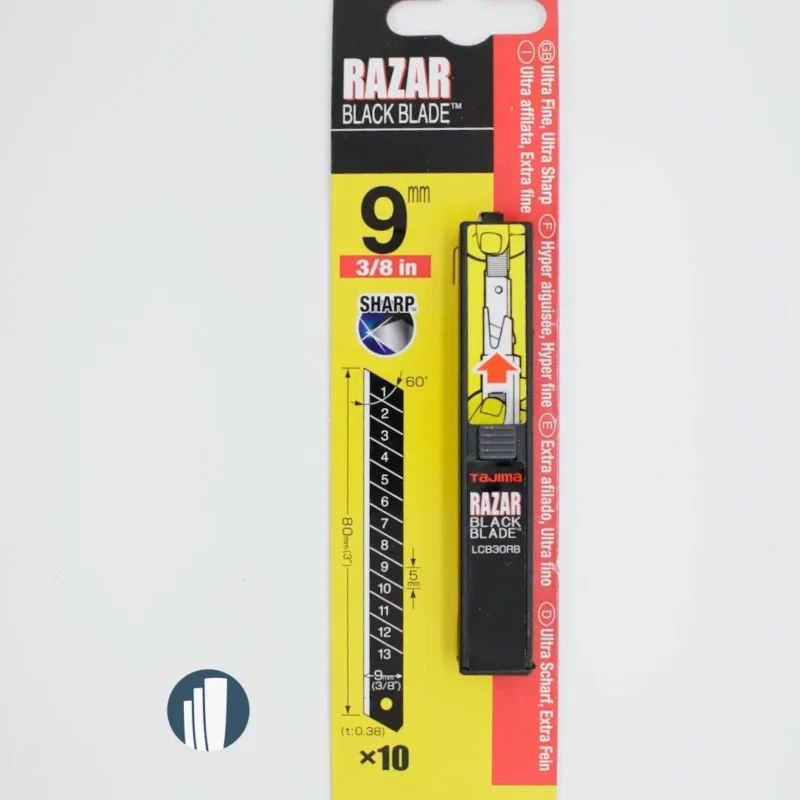
A cutter can be used for certain tasks, especially if you want a simple and safe option, but to develop refined scraping technique we recommend a specific reed making knife.
How do I know if my knife is losing its edge?
If the knife drags the cane, compresses the reed, leaves marks or forces you to press more than usual, it probably needs sharpening or a new blade.
Can I use the same knife for English horn reeds?
Yes. These knives are commonly used for oboe, English horn, oboe d’amore and other double reed instruments, always adapting the technique and scrape.
We hope this guide helps you choose your knife and enjoy making your own reeds. See you at www.eg-reeds.com.









Very interesting stuff to read.